
The Skyscraper Museum is devoted to the study of high-rise building, past, present, and future. The Museum explores tall buildings as objects of design, products of technology, sites of construction, investments in real estate, and places of work and residence. This site will look better in a browser that supports web standards, but it is accessible to any browser or Internet device.
EXHIBITIONS OVERVIEW
CORE EXHIBITION ON PERMANENT DISPLAY
|
|
|
|
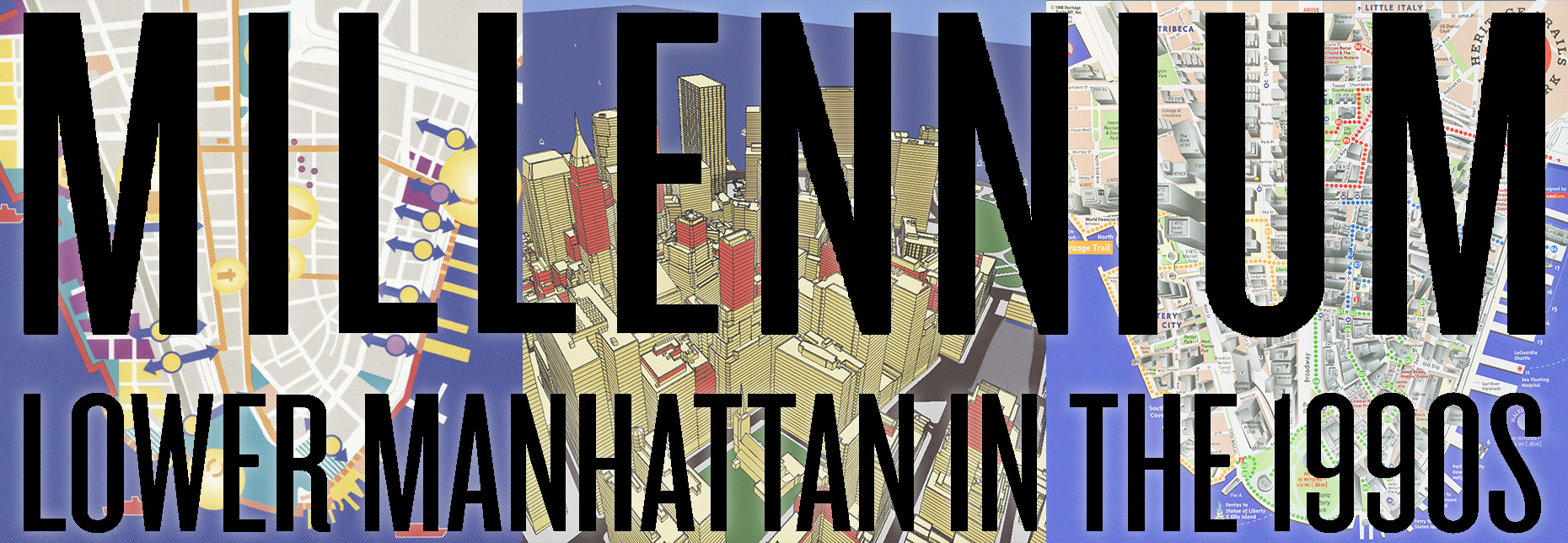
MILLENNIUM: Lower Manhattan in the 1990s
|
|
|
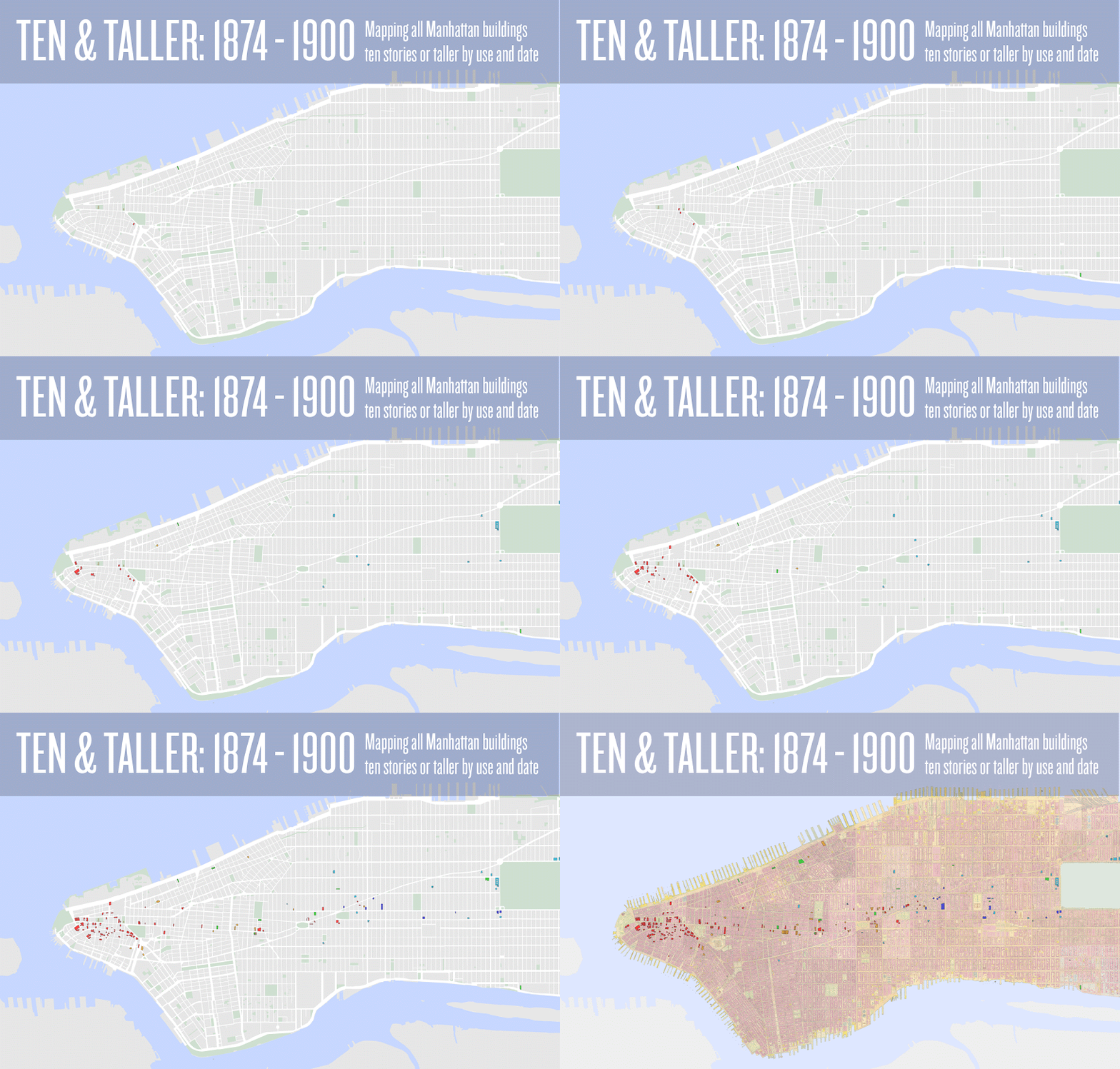
TEN & TALLER: MANHATTAN 1874 - 1900
|
|
|
|
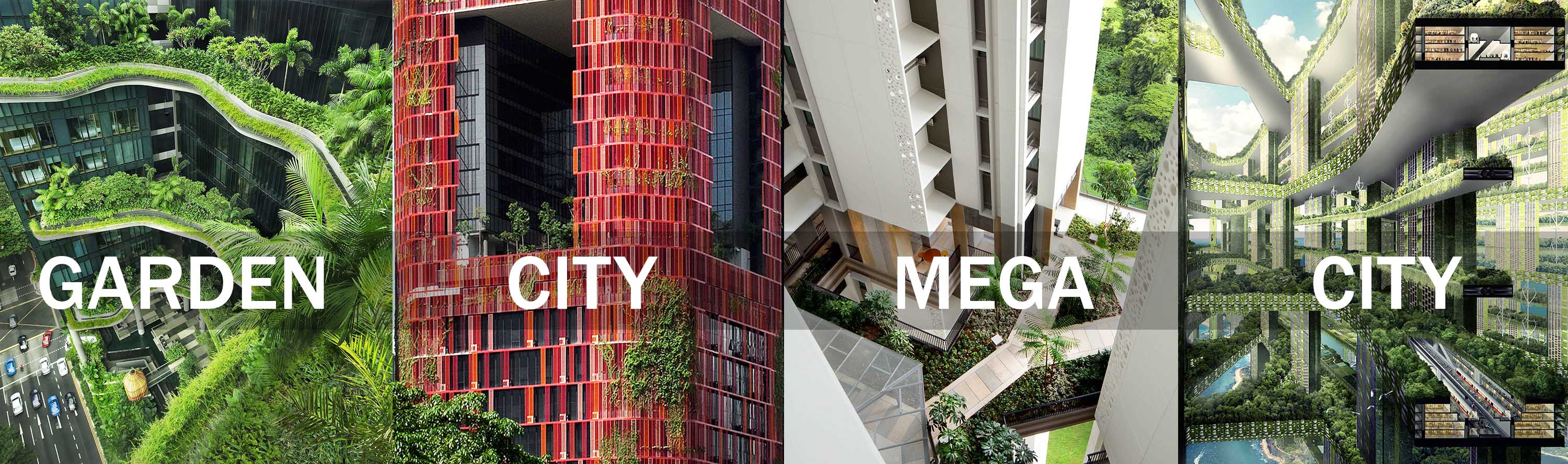
The exhibition features the work of WOHA, the Singapore architects whose tropical towers, enveloped by nature, create vertical villages with sky gardens, breeze-ways, and elevated parks. WOHA’s work rethinks urban life in Singapore and beyond, offering high-density, high-amenity housing and urban commercial centers that create highly social, sustainable, and garden-filled cities. |
|
|
Distinctive tops that add extra height to high-rises have been characteristic of New York skyscrapers from the first tall office buildings in the 1870s. The word skyscraper, after all, evokes both aerial height and a slender silhouette. The romance of Manhattan's towers has been the inspiration and touchstone for a worldwide surge of signature tops.
|
|
|
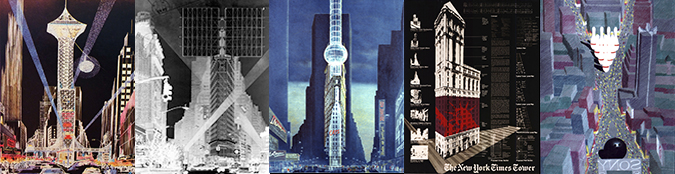
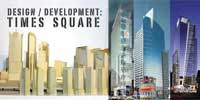
Times Square today is bright and crowded - a tourist mecca, entertainment district, retail powerhouse, and pedestrianized precinct that matches in vitality, both economic and populist, any decade of its storied past. But thirty years ago, the future of Times Square was in limbo - caught between a series of false starts at clean-slate urban renewal by the City and State and an emerging philosophy of urbanism that favored history, preservationist values, electric signs and semiotics, and delirious diversity. |
|
|
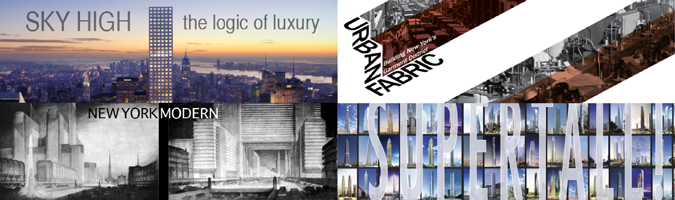
SKY HIGH examines the recent proliferation of super-slim, ultra-luxury residential towers on the rise in Manhattan. These pencil-thin buildings-all 50 to 90+ stories-constitute a new type of skyscraper in a city where tall, slender structures have a long history.
|
|
|
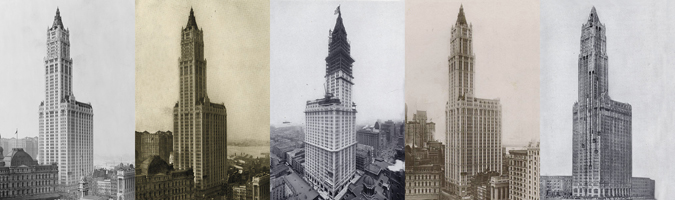
Eighty thousand incandescent bulbs illuminated the New York night on April 24, 1913, when the Woolworth Building opened with a ceremony attended by 800 dignitaries. Witnessed by multitudes and wired to press around the world, the brilliant spectacle was a career-crowning achievement for the tower's owner, the five-and-dime store king Frank W. Woolworth, who paid for the skyscraper with his personal fortune and took a hands-on role in every decision of its design. The great Gothic tower-the Cathedral of Commerce-became the preeminent silhouette on the New York skyline and took the title of world's tallest office building. |
|
URBAN FABRIC: Building New York's Garment Distric
|
|
|
|
The first chapters in New York’s high-rise history were written in the 1870s through the early 1900s when the city’s great newspapers –the Times, Tribune, and World, among others– erected tall towers as signature headquarters. "Newspaper Row” on the east side of City Hall Park was center stage for their architectural competition and a concentrated hub of production, transforming news into newspapers. These early skyscrapers were both ostentatious advertisements of the papers’ self-proclaimed supremacy and vertical factories where on high floors, editors approved stories and compositors set type, while in the cellar and basement, steam engines or dynamos powered thundering presses that night and day rolled out tens of thousands of papers per hour. |
|
|
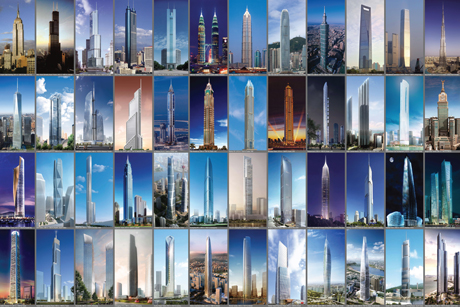
SUPERTALL! is an international survey of superlative towers featuring projects that have been completed since 2001, are under construction, or are expected to top out by 2016. This recent generation of giants, generally 100 stories or higher, represents a new paradigm of slender mixed-use towers that explore innovative approaches in engineering, curtain-wall and construction technologies, energy efficiency and sustainability, and concepts of vertical communities.
|
|
|
Vertical Urban Factory features the innovative architectural design, structural engineering, and processing methods of significant factory buildings from the turn of the 20th century to the present. Now, over a century after the first large factories began to dominate our cities, the exhibition poses the question: Can factories present sustainable solutions for future self-sufficient cities? |
|
|
From colonial times, when the first bastions were erected to mark the edge of town, Wall Street has been continuously transformed, both in function—from commercial and residential to financial—as well as in scale. Row houses were replaced by low-rise banks, then massive high-rise office buildings. The skyscrapers that line Wall Street today represent the climax species of an intense urban process that the exhibit documents with graphics of successive buildings on a given site since 1850. These "Vertical Wall Street" images dramatically illustrate the cycles of growth that shaped the financial district over time, charting both the evolution from small to tall and the growing girth of buildings enabled by new technologies and slow, but savvy site assembly. |
|
|
Shanghai today is a vast metropolis of 18 million residents—the largest city in the world's most populous nation. In just three decades, its population has nearly doubled, and the city has been physically transformed by the twin emblems of modernity—high-rises and highways. Formerly a horizontal expanse of dense and sprawling lilong neighborhoods, Shanghai has grown vertically. Nearly 400 high-rises of twenty stories or more were built in the historic core, Puxi, since 1990, and colossal elevated roads fly over old neighborhoods. In the new business district of Pudong on the east side of the river, a master plan dictates taller towers rising from open green space, culminating in a pair—soon to be a trio—of the world's ten tallest skyscrapers. This is the third exhibition in the FUTURE CITY 20|21 cycle. |
|
VERTICAL CITIES: HONG KONG|NEW YORK
|
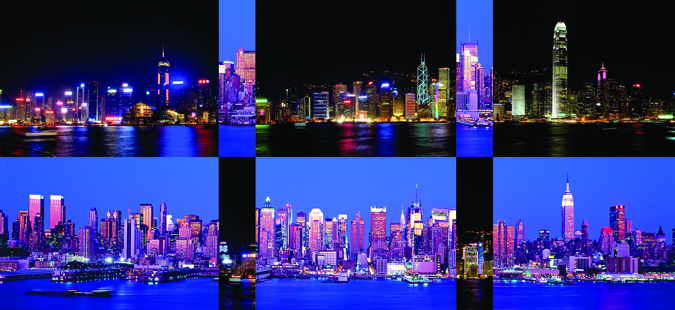
Hong Kong, Asia's Manhattan, is today an island of skyscrapers. Born of its deep-water harbor and constrained by its limited land and steep hillsides, the city expanded upward beginning in the 1970s, even surpassing the number of high-rises in New York in recent years. Driven by similar forces, the vertical development of Hong Kong and New York is compared in this exhibition through photography, film, architectural studies, and an analysis of the demographics and densities of the world's most dramatic skyscraper societies. This was the second exhibition in the FUTURE CITY 20|21 cycle. |
|
|
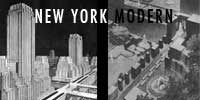
As part of the FUTURE CITY 20|21 cycle of three exhibitions, NEW YORK MODERN looked back at prophecies of the skyscraper city in the early 20th century when the first dreams of a fantastic vertical metropolis took shape. From the invention of the tall office building and high-rise hotels in the late 19th century, New York began to expand upward, and by 1900, the idea of unbridled growth and inevitably increasing congestion was lampooned in cartoons in the popular press and critiqued by prominent architects and urban reformers. |
|
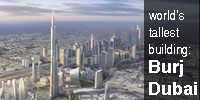
WORLD'S TALLEST BUILDING: BURJ DUBAI
|
|
|
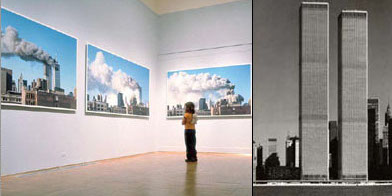
GIANTS: Twin Towers
|
|
|
|
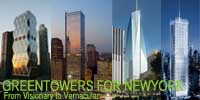
An exhibition that surveyed a new generation of skyscrapers recently completed or under construction in New York City that embraced sustainability and green building strategies as a central tenet of their design. Ranging from high-profile corporate headquarters to speculative office towers, and from "green" apartment blocks to mixed-use and institutional projects, these buildings represented a leading-edge of energy efficiency and environmental responsibility for high rise architecture in the U.S. today. |
|
|
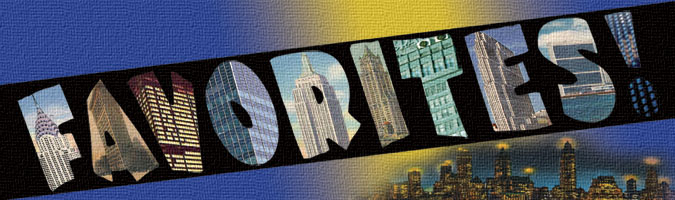
What are your Top Ten favorite New York skyscrapers? That question was posed in a Skyscraper Museum survey completed by an invited list of 100 knowledgeable New Yorkers and building industry professionals, including architects and engineers, developers, brokers, builders, historians, and critics. The results were seen in this exhibition. |
|
|
City of Change explored the role of the skyscraper in shaping the identity and character of downtown's streets and skyline. Linking past, present, and future, the exhibit examined the construction of the World Trade Center and the rebuilding at Ground Zero and highlighted the new construction and residential conversions underway throughout the district. |
|
FRANK LLOYD WRIGHT: VERTICAL DIMENSION
|
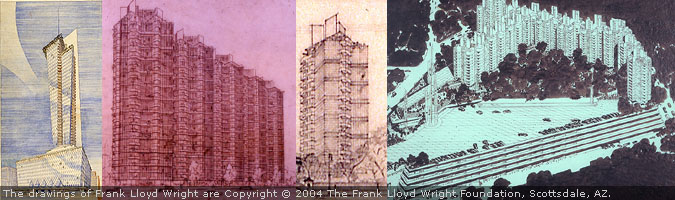
The first comprehensive examination of the high-rise designs of America's foremost architect examined Wright's abiding interest in the re-invention of the tall building. Over the course of his long career, Wright designed a dozen high-rise buildings of which only two were built--the Johnson Research Tower in Racine, Wisconsin (1944), and the Price Tower in Bartlesville, Oklahoma (1952-56). With these designs, Wright proposed a new structure for the skyscraper, challenged prevailing building practices with his use of materials, and proposed new directions in high-rise living. |
|
THE ORIGINAL YAMASAKI WORLD TRADE CENTER MODEL
|
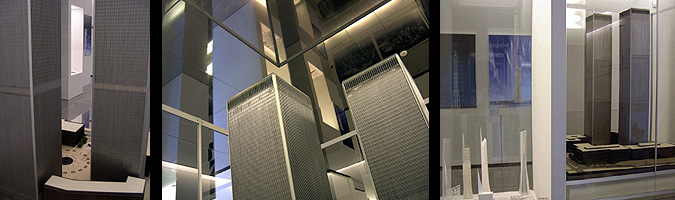
Just six blocks south of Ground Zero, The Skyscraper Museum opened an exhibition on the World Trade Center that featured the original model created for the Port Authority of New York and New Jersey by the architect Minoru Yamasaki. |
|
THE VIEWING WALL AT GROUND ZERO
|
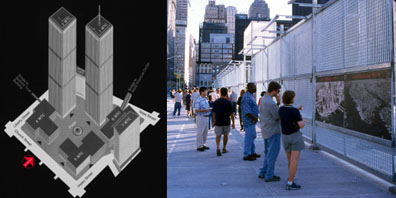
The Skyscraper Museum commemorated the anniversary of 9/11 on September 10, 2002 by erecting a Viewing Wall at Ground Zero. This would be the first of two walls. The second wall was completed in September 2003. The design of each wall consisted of a screen-like grid of galvanized steel, that allowed visitors to see into the Trade Center site as well as carry a series of large fiberglass panels that featured information on the buildings and re-buildings, the history of lower manhattan. Special alcoves of recessed bays contained panels with all the names of the victims of September 11, 2001. |
|
|
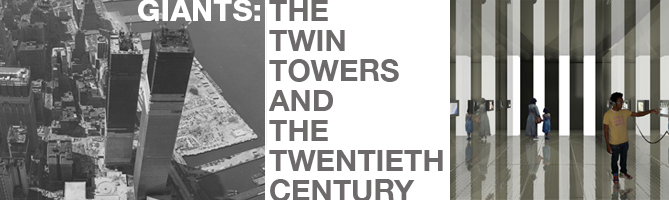
The following site is a tribute to the Twin Towers, examining the history of the complex in its conception, design, and construction from the 1960s through the mid-1970s -- and their destruction on the morning of 9/11. |
|
DESIGN DEVELOPMENT: TIMES SQUARE
|
|
|
|
Through taking an unconventional look at high-rise size. The exhibition introduced Jumbo and Super Jumbo buildings, categories that describe size as measured by volume. |
|
|
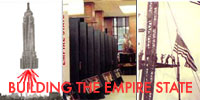
Examined the design and construction of New York's signature skyscraper, drawing together photographs and film of the construction, architectural and engineering drawings, contracts, builders' records, financial reports, and other artifacts. |
|
|
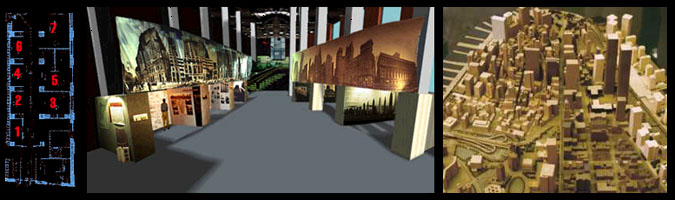
On May 1, 1997, The Skyscraper Museum opened a major exhibition on the architecture and urbanism of Lower Manhattan in donated space, a vacant banking hall at 44 Wall Street, a 1926 skyscraper in the heart of New York's financial district. |